Showing posts with label Reference Material. Show all posts

Friday, March 31, 2017

Battle of Seven Pines in Photographs


This series of Photographs were taken sometime after June 1, 1862. at the Seven Pines Battlefield by Photographer George N. Barnard

32lb field Gun near the twin houses. The twin houses were located behind Casey's Redoubt and near the Williamsburg Stage Road.


The twin houses, orchard, and well at Seven Pines, Va You can see freshly covered graves in the foreground of this picture.

Casey's Redoubt in front of the twin houses. This is what D.H. Hill's Division faced as they came out from the woods. Picture appears to be taken from the Union Side looking North West.

Old Houses and tents near Hooker's Division Headquarters. are used as a Hospital for the wounded.


Famous picture of the wounded soldiers at Seven Pines.


Monday, March 6, 2017

The Great Snowball Fight of 1864: Dalton, GA

Great Snowball fight of 1864: Dalton, Ga
From: Stonewall of the West: Patrick Cleburne and the Civil War


Occasionaly the unpredictable March weather broke routine of camp life and interrupted the training schedule . On rare occasions it snowed and like children released from school , the troops treated any snowfall as an occasion for play. On March 22 dawn revealed a fresh 5 inches of new snow, and a spontaneous snowball fight broke out all across the camp. The men threw themselfs into the fracas with enthusiiasm. One Arkansas soldier recalled, "Such pounding and thumping, and rolling over in the snow, and washing of faces and cramming snow in mouths and in ears and mixing up in great wriggling piles together." (Stephenson, Civil War Memoir)

In Cleburne's Div. , Lucius Polk's Brigade attacked Govan's Brigade, pitting Arkansas against Arkansas, and Cleburne could not resist getting involved. He placed himself at the head of his old brigade and led the attack on Govan's campsite. The snowballs flew thick and fast , and Govans's men Were getting the worst of it when they decided to launch a counterattack. They charged Forward, no doubt yelling for all they were worth and Cleburne suddenly found himseld a prisoner of war. After some tongue -in-cheek deliberation, his captors decided to parol their commander, and claburne was released.

The snowball fight contined and claburnes once again entered the fray. Alas he was captured a 2nd time .. and this time his captors confronted him with mock solemnity about his violation of parole. According to one veteran, "Some called for a drumead court martial; others demanded a sound ducking in the nearby creek. Still others mindfull of Cleburne's reputation as a stern disciplinarian, insisted that the general be meted out his own customary punishment. The idea caught on and soon the whole brigade took up the familiar order: 'Arrest that soldier and make him carry a fence rail!' " Cooler heads prevailed, with Cleburne's defenders arguing that after all this was the 1st occasion on which he had been known to break his word and once again his captors granted him parole. When it was all over, Cleburne authorized a ration of whiskey to the troops , and they stood around great bonfires singing and yelling "at the top of their lungs" {Steve Davis "The Great Snowbattle of 1864" CWTI (June 1976) }

More snow fell on the 23rd of March, provoking yet another snowball fight and rain and snow continued through the rest of the month. On the 31st a more serious sham battle occurred when Joe Johnston organized a mock engagement involving Hardee's Corps. Cleburne's and Bates's Div. Squared off against those of Cheatam and Walker. It was a fine weather for a charge, and the troops entered the spirit of the drill, firing off a blank cartridges each, thrilling the small audiences of ladies who had driven out from Dalton to watch. One veteran recalled, "The noise waas terrific and the excitement intense, but nobody was hurt. . . except perhaps one of the cavalry men who was dismounted while charging a square of infantry." That night, back in camp , it was peaches and cornbread again for dinner. (John S. Jackson Diary of A Confederate Soldier)

Thursday, June 25, 2015

Wade Hampton and his Legion


Wade Hampton III was born in Charleston South Carolina on March 28 1818.
Hampton was a conservative on issues of secession and slavery. He opposed the division of the union as a legislator when the war began. Nonetheless he was loyal to his home state of South Carolina He resigned his position in the Senate and enlisted as a private in the state militia. However, the Governor of South Carolina insisted that he accept a Colonel's commission. Like those in the north, the elite of society were promoted based on social standing regardless of military training. Fortunately for Hampton, he was a born leader.
Hampton organized and partially financed the unit known as "Hampton's Legion." The Legion consisted of six companies of infantry, four companies of cavalry, and one battery of artillery.
Despite his lack of experience and being 42 years old, Hampton was a natural cavalryman. By the end of the war, he was one of only two men without prior military experience to achieve the rank of Lieutenant General. The Legion was broken up and assigned to other units in the Army of Northern Virginia. Most notably were the Hampton Legion Infantry which served in General John B. Hood's famed Texas Brigade. Hampton, and his Legion Cavalry, maintained a presence in J.E.B. Stuart's cavalry division. When Stuart was killed at the Battle of Yellow Tavern in 1864, Hampton was named as his successor to command.

6 companies of infantry. 4 squadrons of cavalry and a battery of 12lb Napoleons

The model is a modified "Ambrose Burnside from the GHQ line of models.


Experimented with some camera features. Took this in sepia.

I like the black and white style of the pic.

Inspecting the troops.


Saturday, February 7, 2015

Snowball Fight Feb 25, 1863


I found this article awhile back and thought I should repost it here.


A Civil War snowball fight
Two back-to-back snowstorms in February of 1863 provided the ammunition for a friendly snowball battle amongst rival divisions of Confederate troops in Fredericksburg,Virginia. On February 19, eight inches of snow fell on the region. Two days later, nine inches of snow fell. On February 25, sunny skies and mild temperatures softened the deep snow cover, providing ideal conditions for making snowballs.

During this time, the Confederate Army was camped near Fredericksburg. Some of the Divisions of the army had been reorganized, which had created friendly rivalries between the Confederate brigades and regiments. This helped spark a huge snowball battle near Rappahannock Academy in which approximately 10,000 Confederate soldiers participated. One soldier who participated in the snowball battle described it as one of the most memorable combats of the war.”

The battle started on the morning of February 25, 1863, when General Hoke’s North Carolina soldiers marched towards Colonel Stiles’ camp of Georgians, with the intent of capturing the camp using only snowballs. The attacking force, composed of infantry, cavalry and skirmishers, moved in swiftly. Battle lines formed and the fight began with “severe pelting” of snowballs. Reinforcements arrived from all sides to assist the brigade under attack. Even the employees of the commissary joined the snowball battle. Soon, the attacking soldiers were pushed back.

Hoke’s beaten soldiers retreated back to their camp. Colonel Stiles then held a Council of War on how best to attack the retreating force. He decided to organize his men and march directly into their camp, with snowballs in hand. When Stile’s forces finally arrived in Hoke’s camp, they were quite surprised to find that their adversaries had rallied and filled their haversacks to the top with snowballs. This allowed Hoke’s soldiers to provide an endless barrage of snowballs “without the need to reload.” The attacking force was quickly overwhelmed and many of their soldiers were captured and “whitewashed” with snow. The snowball battle came to an end and both brigades settled back into their respective camps. The captured prisoners were quickly paroled and returned to their camp, to much heckling from fellow soldiers. It was noted that General Stonewall Jackson had witnessed the snowball battle. One soldier remarked that he had wished Jackson and staff had joined the fight so he could have thrown a snowball at “the old faded uniforms.”

The weather turned mild and rainy in the following days. Other snowball battles were documented during the War – including a snowball fight at Dalton, Georgia – but The Snowball Battle of Rappahannock Academy was unique in size, strategy and ample snow cover. The depth of the snow cover on the day of the battle was documented in a soldier’s diary to be 12 inches.http://www.weatherbook.com/Snowball.htm 

This is an excerpt from the book, Washington Weather .


Sunday, January 18, 2015

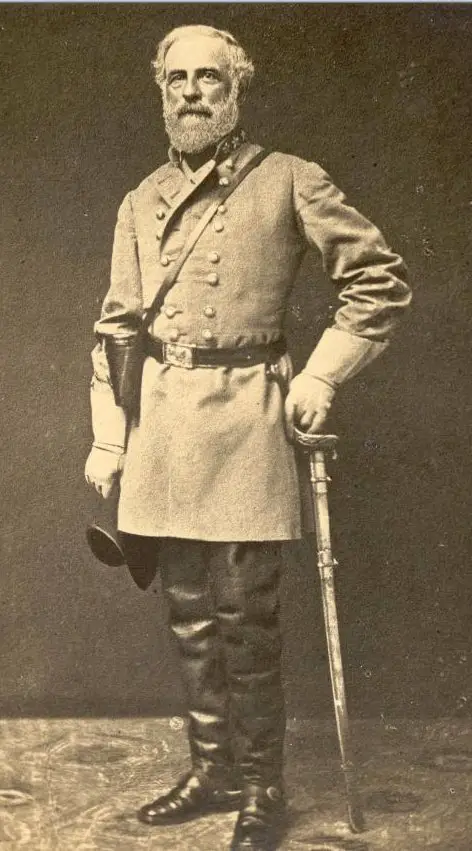
General Lee's Command style, Winter 1864-65

This January 19th marks Robert E. Lee's 208th Birthday. It is only
fitting that I post this article.


Each one of us, at one time or another, have come across a boss or supervisor who has so lacking in ability that it boggles the mind on how they could have possibly risen to the position of authority. A person cannot be respected as a leader if they always talk down and belittle their coworkers and subordinates. Thankfully there comes the opposite end of the spectrum. People who stand head and shoulders above the rest with their ability to command, delegate and communicate.
Some of us have the gift of"Constructively criticism" and the ability to get a point across without damaging the working dynamic.

The following is an excerpt from Reminiscences of The Civil War


"The left of my line rested on the west bank of Hatcher's Run. A.P. Hill's Corps was on the east side, with it's right flank upon the same stream. The commanding general directed that I build a fort at the left of my line, and that A.P. Hill construct a similar one near it on the opposite side of the run.General Hill became ill after the order was received, and the construction of his fort was not pressed. Indeed, the weather was so severe and the roads so nearly impassable that there was no urgent necessity for the haste. General Lee, however, who habitually interested himself in the smaller as well as the larger matters connected with the army, did not forget these forts. Riding up to my Headquarters on a cold morning in January, 1865, he requested me to ride with him to see the forts. As we mounted he said: "We will go by General ----'s quarters and ask him to accompany us, and we will examine both forts." When this officer joined us (he was temporarily in command of Hill's Corps during the latter's absence on sick-leave), General Lee at once asked: "General Gordon, how are you getting along with your fort?"
     "Very well, sir. It is nearly finished."
Turning to the officer, he asked: "Well General ------, how is the work upon your fort progressing?"
This officer, who had felt no special responsibility for the fort, as he was only temporarily in charge, was considerably embarrassed by the general's pointed inquiry. He really had little or no knowledge of the amount of work done upon it, but ventured, after some hesitation, the reply: "I think the fort on my side of the run is also about finished, sir."
   Passing by my work after a short halt, we rode to the point at which the A.P. Hill fort was to be located. No fort was there; the work was scarcely begun. General Lee reined up his horse, and looking first at the place where the fort was to be, and then at the officer, he said: "General, you say the fort is about finished?"
   "I must have misunderstood my engineers, sir."
   " But you did not speak of your engineers. You spoke of the fort as nearly completed."
This officer was riding a superb animal which General Lee knew had been presented to his wife. His extreme embarrassment made him unusually nervous, and his agitation was imparted to the high mettled animal, which became restless and was not easily controlled. General Lee in the blandest manner asked: "General, doesn't Mrs. ---- ride that horse occasionally?"
    "Yes, sir," he replied.
    "Well, general, you know that I am very much interested in Mrs. -----'s safety. I fear that horse is too nervous for her to ride without danger, and I suggest that, in order to make him more quiet, you ride him at least once every day to this fort."
     This was his only reprimand; but no amount of severity on the part of the commander-in- chief could have been more trying to the sensibilities of the officer, who was an admirable soldier, commanding General Lee's entire confidence. The officer's mortification was so overwhelming that, on the return, he rode considerably in the rear. General Lee observed this, and could not resist the impulse to mitigate, as far as possible, the pang caused by the rebuke that he had felt compelled to administer. Halting his horse for a moment and looking back at the officer in the rear, he called to him: "Ride up and join us General. I want to ask you and General Gordon how long this war is to last." (1)

General Lee rode with both subordinate officers back to the rear areas and engaged in conversation on the length of the war and news from relatives back home.. The General made his point about the importance of the fortifications being built.


Reminiscences of the Civil War by John B. Gordon. Ch 26 pg 378-381.

Sunday, December 21, 2014

Christmas 1864

Battle lines around Richmond and Petersburg in Fall 1864


By December of 1864, Lee's Army of Northern Virginia had been entrenched around Richmond and Petersburg Virginia since June. Grant's stranglehold of these cities has taken its toll.


The following is an excerpt from "Reminiscences of War" by John B. Gordon.


"Christmas (December 25, 1864) came while we were fighting famine within and Grant without our lines. To meet either was a serious problem. The Southern people from their earliest history had observed Christmas as the great holiday season of the year. It was time of times,  the longed-for period of universal and innocent but almost boundless jollification among young and old. In towns and on plantations, purse strings were loosened and the restraints relaxed.
The holiday, however, on Hatcher's Run, near Petersburg, was joyless enough for the most misanthropic. The one worn out railroad running to the far south could not bring us half enough necessary supplies; and even if it could have transported Christmas boxes of good things, the people at home were too depleted to send them. They had already impoverished themselves to help their struggling Government, and large areas of our territory had been made desolate by the ravages of the marching armies. The brave fellows at the front, however, knew that their friends at home would gladly send them the last pound of sugar in the pantry, and the last turkey or chicken from the barnyard. So the facetiously wished each other "Merry Christmas!" as they dined on their wretched fare. There was no complaining, no repining, for they knew their exhausted country was doing all it could for them.
At my headquarters on that Christmas day there was unusual merrymaking. Mrs. Gordon, on leaving home four years before, had placed in her little army trunk a small package of excellent coffee, and had used it only on very special occasions- "to celebrate," as she said, "our victories in the first years, and to sustain us in the defeat at the last." When I asked her, on the morning of December 25, 1864, what we could do for a Christmas celebration, she replied, "I can give you some of that coffee which I brought from home." She could scarcely have made an announcement more grateful to a hungry Confederate. Coffee- genuine coffee! The aroma of it filled my official family with epicurean enthusiasm before a cup was passed from the boiling pot.If every man of us was not intoxicated by that indulgence after long and enforced abstinence, the hilarity of the party was misleading."

Reminiscences of the Civil War by John B. Gordon. Ch 26 pg 378-379.


defensive works outside Petersburg. Va

Contemporary map of Petersburg by Capt Jed Hotchkins

13" siege mortar outside Petersburg Va. Nicknamed  "The Dictator."
This 17,120 lb gun fired a 197 lb shell a maximum range of 4,300 yrds.


Friday, April 11, 2014

South Carolina Flag


Current South Carolina State Flag.

In 1775, Colonel William Moultrie was asked to design a flag for the South Carolina troops to use during the American Revolutionary War. His design had the blue of the militia's uniforms and the crescent.

From Colonel William Moultrie's memoirs
“A little time after we were in possession of Fort Johnson, it was thought necessary to have a flag for the purpose of signals: (as there was no national or state flag at that time) I was desired by the council of safety to have one made, upon which, as the state troops were clothed in blue, and the fort was garrisoned by the first and second regiments, who wore a silver crescent on the front of their caps; I had a large blue flag made with a crescent in the dexter corner, to be in uniform with the troops...."
.
This flag was flown at the  fortress on Sullivan's Island, where  Moultrie faced off against a British fleet off the Carolina coast.
During the 16 hour battle on June 28, 1776, the flag was shot down, but Sergeant William Jasper ran out into the open, raising it and rallying the troops until it could be mounted again. This gesture was so heroic, that the flag came to be the symbol of the Revolution. Because of the defense of the fort, Charleston was saved from occupation for four years.
Soon the flag would be popularly known as either the Moultrie Flag or Liberty Flag, it became the standard of the South Carolina militia. At the end of the war Major General Nathaniel Greene presented the flag to the city when it was liberated. Greene described it as having been the first American flag to fly over the South.


Civil War

South Carolina considered many designs for the Republic flag, it was decided that the existing state flag with an upward facing gorget and blue background could be modified for a national flag. On January 26, 1861, the South Carolina General Assembly adopted a new flag by adding a golden palmetto tree encircled with a white background. However, this flag has become known as the "2-day flag" because the golden palmetto tree was changed on January 28 to a simple white palmetto tree on the blue background.

The palmetto tree was added as a reference to Moultrie's defense of Sullivan Island; the fortress he'd constructed had survived largely because the palmetto trees, laid over sand walls, were able to withstand British cannons.


Palmetto Guard Flag


 On April 14, 1861, Fort Sumter in Charleston Harbor surrendered to Confederate General P.G.T. Beauregard. A slight variation of the flag was flown at the fort. The flag consisted of a palmetto tree on an entirely white background with a red star in the upper left quadrant, and is commonly known as "The Palmetto Guard Flag." In all likely this variation is the first Confederate flag flown over captured United States' territory.


The Sovereignty Flag


The Sovereignty flag was never recognized as an official flag in South Carolina. But there are also claims that it was flown for a short period of time in South Carolina after its secession on December 20, 1860. Another significant flag, not pictured here is the "South Carolina Seccession Flag", the day after South Carolina seceded a red flag, with two tails, a large white star and an upside down crescent moon at the top by the flag staff was raised over the Charleston Custom House. It then spread to other cities as a symbol of secession.

Here are some flags carried into war by South Carolina troops.


1st SC Volunteers
1st South Carolina
Infantry Variant (State Flag)
Army of Northern Virginia

7th South Carolina Infantry Battalion