Showing posts with label Military Profile. Show all posts

Sunday, April 24, 2016

Fort Gaines: Part of the Battle of Mobile Bay


Just had the opportunity to stop here this past weekend. I have to say that i enjoyed it.

Fort Gaines Historic Site
51 Bienville Blvd
Dauphin Island, Alabama 36528
251-861-6992

Situated on the tip of Dauphin Island at the entrance to Mobile Bay, Alabama, sits Fort Gaines. The fort was designed by General Simon Bernard. Construction was started in 1819 but was put on hold because of costs and the belief that the entrance to the harbor was too shallow to warrant the construction of a fort. In 1845 funds were made available and the work was completed by 1861. Needless to say, On August 5, 1864, The Union Navy under the command of Admiral David Farragut lead his fleet of ships into the harbor running the defenses of both Fort Gaines and Fort Morgan which is across the entrance at 3 miles distant.In hindsight, he proved that the harbor could be attacked.  The Guns from both forts, the mine field at the harbor entrance, and the small squadron of ships including the CSS Tennessee put up a good fight.


The North East bastion. Looking out into the Harbor.


Col. Charles D Anderson, commander of the Fort at the time of the battle.

The architecture is what I find amazing. A structure built so long ago still standing.

The Officers Mess hall.

Displays in the Fort Museum.

Uniform of the 21st Alabama Infantry Regt. This unit garrisoned both Fort Gaines and Fort Morgan.

"Bite the Bullet." This phrase usually refers to something that we don't want to do, but we do it anyway. Back then, it had a "Literal" meaning. When doctors and surgeons ran low on medicine they would give the patient something to bite down on to keep from screaming out in pain. This lead bullet has teeth marks on it from when it was used. You can't help but wonder, Who had to bite the bullet? What kind of surgery did they endure? Did the patient survive?


This is the Anchor from the USS Hartford, Admiral David Farragut's Flagship. It was from the deck of this ship that he witnessed the Ironclad monitor USS Tecumseh strike a mine and sink in less than five minutes. The ships that followed the Tecumseh began to stall and bottleneck under the guns of the forts. It is believed that Admiral Farragut said. "Damn the torpedoes, Full speed ahead!" (Torpedoes in this time period where underwater mines.)


Three miles in the distance, Fort Morgan sits.

Fort Gaines is listed as one of the most "At Risk" Civil War sites in the United States. The guns may be silent, but the war on the shoreline is continuously fought against erosion. Sadly, there are a few sections of the fort that can't be accessed due to water damage and flooding. The hurricanes in recent years have gone a long way to hurting the structural integrity and some of the buildings.

There is something about the fresh air blowing off the Gulf. It fills your lungs and refreshes you. There were wind gusts on the day that I visited. I had to take my ball cap off to keep it from being blown off my head. The sky was overcast and it was a perfect day for this "little field trip." No chance of a sunburn today. 

Directly off in the distance, Sand Island Lighthouse can be seen. The area of the lighthouse, built in 1838, is where the Union Navy formed up before they made their attack run.

The Fort from the outside.

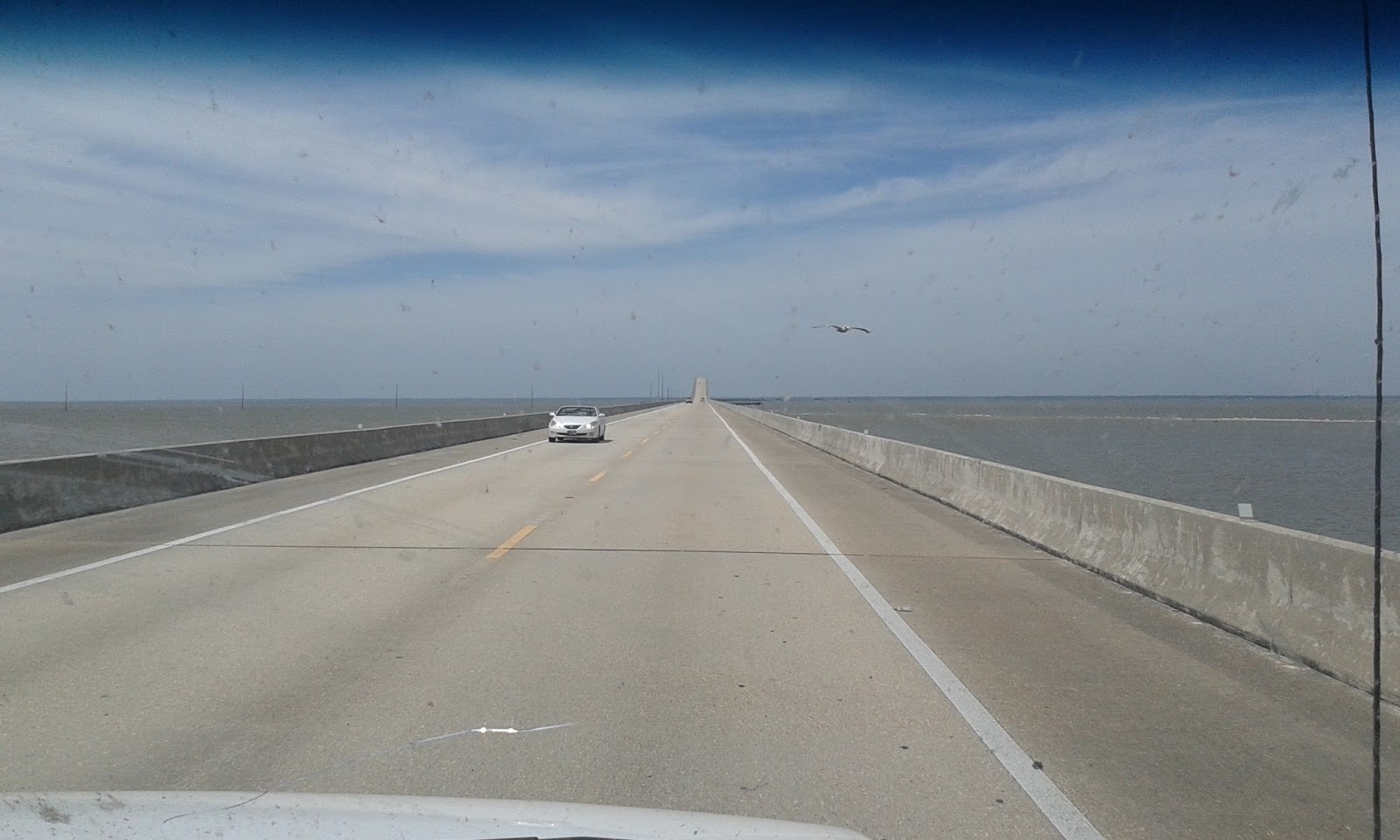
The drive back to the mainland from Dauphin Island.
If you are ever in The Mobile Alabama Area, I recommend taking the time to visit Fort Gaines and Fort Morgan across the way. A toll Ferry can take you across the Harbor if you like. My time in Mobile was tradgicaly short. I was only able to visit here and the USS Alabama Memorial. The next time I am in town i want to visit Fort Morgan and also visit Bellingrath Gardens

Sunday, September 6, 2015

General John B. Gordon and his Georgia Brigade


John Brown Gordon was born Jan 6, 1832 on a farm in Upson County Georgia. He was the fourth of twelve siblings. He went to the University of Georgia but left before he graduated. He studied Law in Atlanta and passed the bar exam. John and his father Zachariah invested in a series of coal mines in Tennessee and Georgia.
At the outbreak of the war, Gordon was elected Captain of a company of mountaineers. He presented himself and his company to the Governor of Georgia for service in the war. At the time Georgia hadn't issued a call for men yet. Discouraged, but not defeated, Gordon marched his Company to Montgomery Alabama where they were formed up with the 6th Alabama Infantry Regiment.
Gordon saw action at the head of his regiment under then, Brigadier General Robert Rodes During the battle of Seven Pines in May/ June 1862. When Rodes was wounded, Gordon was advanced to lead the Brigade. He showed fearless zeal in the face of the enemy during the Seven Days Battles. He would pace fearlessly among his men shouting orders and firing his pistol. Enemy bullets shattered the handle of his pistol, pierced his canteen, and ripped away part of his uniform coat front. The men of the brigade claimed that he had a charmed life with the amount of danger he was exposed to and had come away unscathed. The first test to this belief came at the Battle of Malvern Hill. He was temporarily blinded as dirt was kicked up in his face.

A impressive list of wounds sustained from the war.
Gordon's good fortune ran out at the  Battle of Sharpsburg in September  1862. Gordon, back in command of his regiment, was assigned by General D.H. Hill to protect the center line from the Union advance. The Brigade placed themselves on an old road that had been eroded from years of use. This "Sunken Road" was an ready made fortified position. The "Bloody Lane" saw some of the worst fighting of the battle. As the Union Soldiers advanced toward the sunken road Gordon gave the order for his men to hold their fire until the last moment. This would insure the maximum effect their first volley being fired. As the Federal Regiments crossed the crest of the hill and started their descent towards the Confederates in the road, Gordon gave the order to fire. During the course of the battle, Gordon had a minie ball pass through his calf, a second ball hit him higher in the same leg. Later a third ball passed through his left arm. During this time he continued to give orders and maintain the line. Several aides pleaded with him to go to the rear but he refused.  Soon a fourth ball hit him in the shoulder. The loss of blood started to take its toll and Gordon rested himself against a fence post. He was finally put down by a minie ball to the face. This last bullet passed through his cheek and out his jaw. Gordon pitched forward and laid face forward in his own cap. He would have drowned in his own blood if it had not drained out through a bullet hole in the cap. A Confederate Surgeon treated his multiple wounds and thought that he would not survive. He was returned to Richmond where he was nursed back to health by his wife.
After several months of recuperation, Gordon returned to duty in June  1863. This time in the lead of a Brigade under General Jubal Early's Division.  Gordon continued to serve throughout the war, participating in The Gettysburg Campaign, The Battle of the Wilderness, Spotsylvania Courthouse, The Valley Campaign of 1864, The Siege of Petersburg. He was a Corps Commander with General Lee at Appomattox. After the war, Gordon returned home to Georgia and went into politics serving as State Senator and as Governor.


Brig Gen. John B. Gordon and his Georgia Brigade


Tuesday, August 4, 2015

Siege Mortars


This is my 10" and 13" siege mortars. These are made by GHQ Miniatures. The crew are also from GHQ.


Model 1861 13" Seacoast Mortar. The barrel weighed in at 17,120 lbs and fired a 197 lb shell. All of the Confederate 13" mortars were seized from Federal Arsenals. They were used primarily for defense of forts and other fixed positions. 


10" Siege Mortars

13" Siege Mortars.

The Army of the Potomac had dedicated siege train assigned to them when they invaded the Virginia Peninsula in 1862. General George McClellan attempted to lay siege to the city of Yorktown which was in Confederate hands and held by General John Magruder. Before all the mortars were in place, Magruder evacuated the city.

Model 1841 10"  Sea Coast Siege Mortars. the barrel weighed in at 5,775 lbs and it fired a 88 lb shell.

13" Siege Mortars


Monday, July 27, 2015

Griswoldville Battlefield

I have lived in Georgia for the better part of all my life and never visited this place until recently. I live almost an hour from it. One of the first things you will notice when crossing the railroad tracks into the community is the Georgia State Historical Markers that are set up on the side of the road. They tell the story of the Griswoldville town and its part in the Civil War.


This is drawing of the Town of Griswoldville as it look at the time The Federals burned it to the ground.
This was a thriving community in 1864. The town also contained a soap and candle factory.


During its years in operation, The Griswoldville pistol factory manufactured
over five thousand .36 cal pistols for the Confederate Government. At its peak. It was producing
Five pistols a day. A low number compared to Colt Firearms.

The Church is standing close to the original location of the Griswold Pistol factory.

The Post Office and train depot would have been on the left side of the road by the rail road tracks.
Also present was the Candle and Soap Factory, A Saw Mill and Grist Mill. General Sherman
 made sure that no one washed themselves with soap in the candle light.


North is top of the page. West is to the left of the page. West is also the direction of Macon Georgia.
 The origin of the State Militia that attacked the Federals outside Griswoldville.


The Battlefield Monument is situated of Baker Road which  is off of Old Griswoldville Road in Jones County Georgia. The Monument is placed basically where the center of the front line would have been. The Confederates would have advanced toward the monument from the treeline in the distance.


Arvin Nye Gunnison, Sam Griswold's business partner in the firearms factory.

Samuel Griswold. The founder of the town

The Athens Battalion of teh Home Guard would have advanced from the treeline in the distance. There is a home and private property behind me. I wonder how it feels knowing your home is sitting on the fron line of where people have died?